
DIY Installation – What you need to know
December 9, 2025
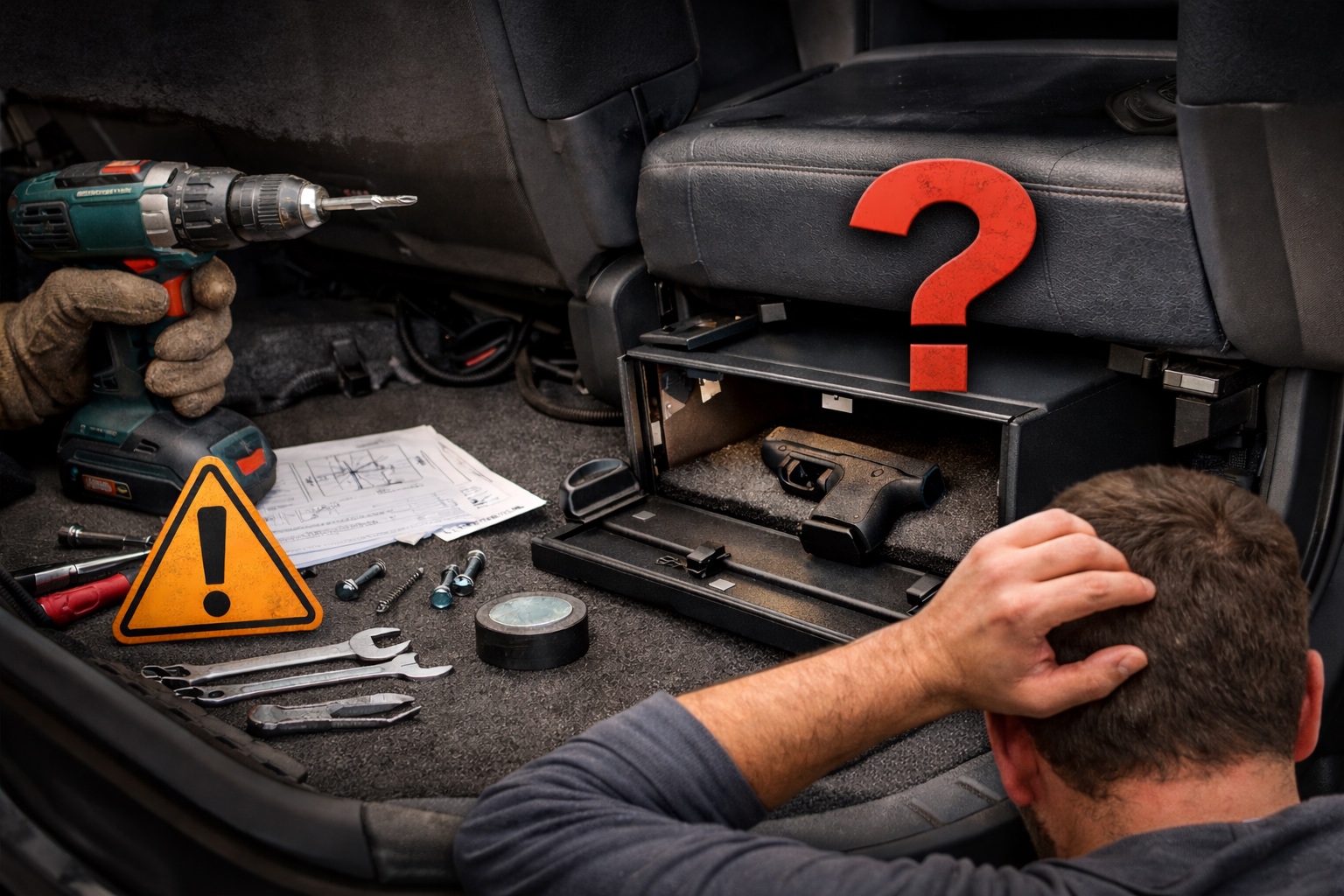
Pangolin® specialises in the design and manufacture of vehicle firearm safes, but does not undertake installations. The safes are designed for installation in compliance with the Firearms Control Regulations. They are supplied with a standard installation kit with bolts and nuts that suit most, but not all vehicles.
Can you install your own vehicle firearm safe? Does it affect legality?
Installation can be done DIY, but there are risks which the firearm owner must assess for him/herself. Some on legality, but mostly technical. The legislative compliance requirements are vitally important, but minimal. When thinking about the DIY option these are the more important factors to consider:
- SANS 953-1 specifies that the installer must supply the firearm owner with a certificate of installation. Self-certification is an incongruity at best. At worst it may be indefensible when you need it most.
- Pangolin® certified installers are trained not only to do the installation in compliance with legislation and provide the certificate, but also create an evidential record of the installation that will stand up in court.
- Installation in some vehicles is technically challenging, requiring vehicle fitment expertise. A mistake can easily cost 20-50 times the installer fee, plus loss of vehicle warranty.
- Sometimes the best mounting locations require special tools and fasteners. On some vehicles the standard bolt and nut mounting methods are simply not possible at all.
- Pangolin® certified installers are trained to complete the installation to a much higher level of security than is required by SANS 953-1 (which is a low security standard). This is a Pangolin® requirement in keeping with a premium quality, high security safe that may be used for both firearms and other valuables.
- The Pangolin® product warranty is assured when the installation is undertaken by a Pangolin® certified installer.
- Non-professional installation may void or compromise the OEM vehicle warranty.
- Non-professional installation may void an insurance claim.
- Reference to SANS 953-1 will be necessary for the installer to be in a position to sign off on the installation certificate and to ensure compliance.
What is a “Pangolin® certified installer”?
A Pangolin® certified installer is a person with vehicle fitment expertise that has been trained, assessed and certified by Pangolin® for competence in the installation of Pangolin® vehicle safes in compliance with legislation and in accordance with Pangolin’s stringent security requirements.
In addition to affixing the safe, Pangolin® certified installers take care of anti-corrosion treatment and sealing and can give practical advice on choosing a mounting location that complies with legislation, is technically acceptable for the vehicle and suits the needs of the firearm owner. They have the benefit of tapping into a national network of installers for identifying the best mounting locations and getting technical support if it should be required.
What motivated the certification of Pangolin® safe installers?
Shortly after Pangolin® vehicle safes were introduced to the market, many firearm owners complained about the absence of any form of prescribed accreditation system for installers. Unfortunately, lack of legislation meant nothing could be done about that. However, it was found that the complaints were well justified because on inspection of several installations, various unacceptable shortcomings were discovered. To overcome the problem, a form of quality assurance was implemented by Pangolin® so that customers could have the option of choosing an installer that had been trained and vetted by the safe OEM for competency in Pangolin® firearm safe fitment.
How does an installer get certified?
Pangolin® provides training and assessment services and issues a certificate of competency (in Pangolin® safe fitment) to installers who meet the criteria for both legislative and Pangolin® requirements. In addition to Pangolin’s own requirements for a high quality and secure installation, the training material covers the relevant parts of the Firearms Control Act, Firearm Control Regulations and SANS 953-1 that pertain to vehicle firearm safes. The aim is to assure both compliance with legislation and a secure, high quality installation.
Conclusion
A competent DIY person is not likely to have trouble installing a Pangolin® safe, but is it the wisest choice?