
What PTSD Feels Like: A Silent Earthquake Within
July 9, 2025
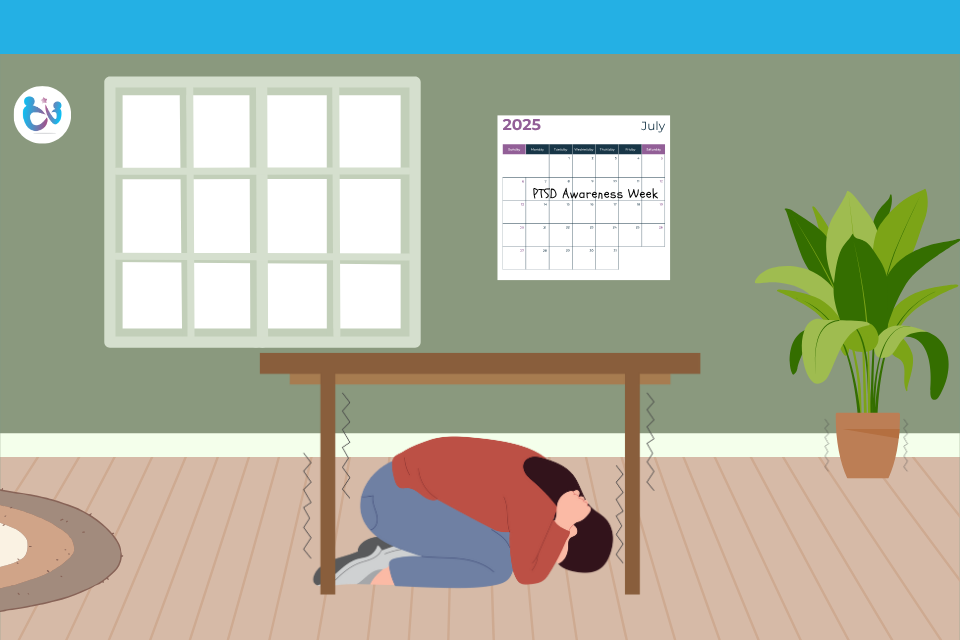
“It wasn’t the event that kept happening—it was my body that kept remembering.”
PTSD, or Post-Traumatic Stress Disorder, is often misunderstood as something only experienced by war veterans or victims of extreme violence. But trauma comes in many forms—and so does PTSD.
It might be:
- A car accident you walked away from, but never really left.
- A breakup after emotional abuse that still loops in your mind.
- Growing up in a household where walking on eggshells became second nature.
- Being overlooked and dismissed in the face of racism, homophobia, or other chronic stress.
PTSD doesn’t always look dramatic. It can feel like:
- Sudden rage or emotional shutdown over small things.
- Startle responses that seem exaggerated to others.
- Avoidance of people, places, or feelings connected to the past.
- Feeling numb, like you’re watching your life from a distance.
- Nightmares, flashbacks, or persistent fear, even when nothing seems wrong.
The Invisible Wound
Many of those living with PTSD don’t realize they’re living with trauma. They say:
“I should be over it by now.” “It wasn’t even that bad.” “Other people had it worse.”
But trauma is not a competition. It’s the body’s subjective experience that matters.
When the nervous system becomes dysregulated from trauma, it doesn’t matter how “big” or “small” the event seems. It matters how it was experienced. And often, it’s stored in the body in ways that bypass logic.
Naming What Hurts is the Beginning
Recognizing that you may be carrying trauma is not weakness. It’s an act of courage. It’s the first step in making space for healing and reclaiming your peace.
At Emotiontal Assessment and Therapy Centre, we walk gently with those whose stories are heavy. You are not alone in this.