
Steering Failures: More than just a leak
May 19, 2026
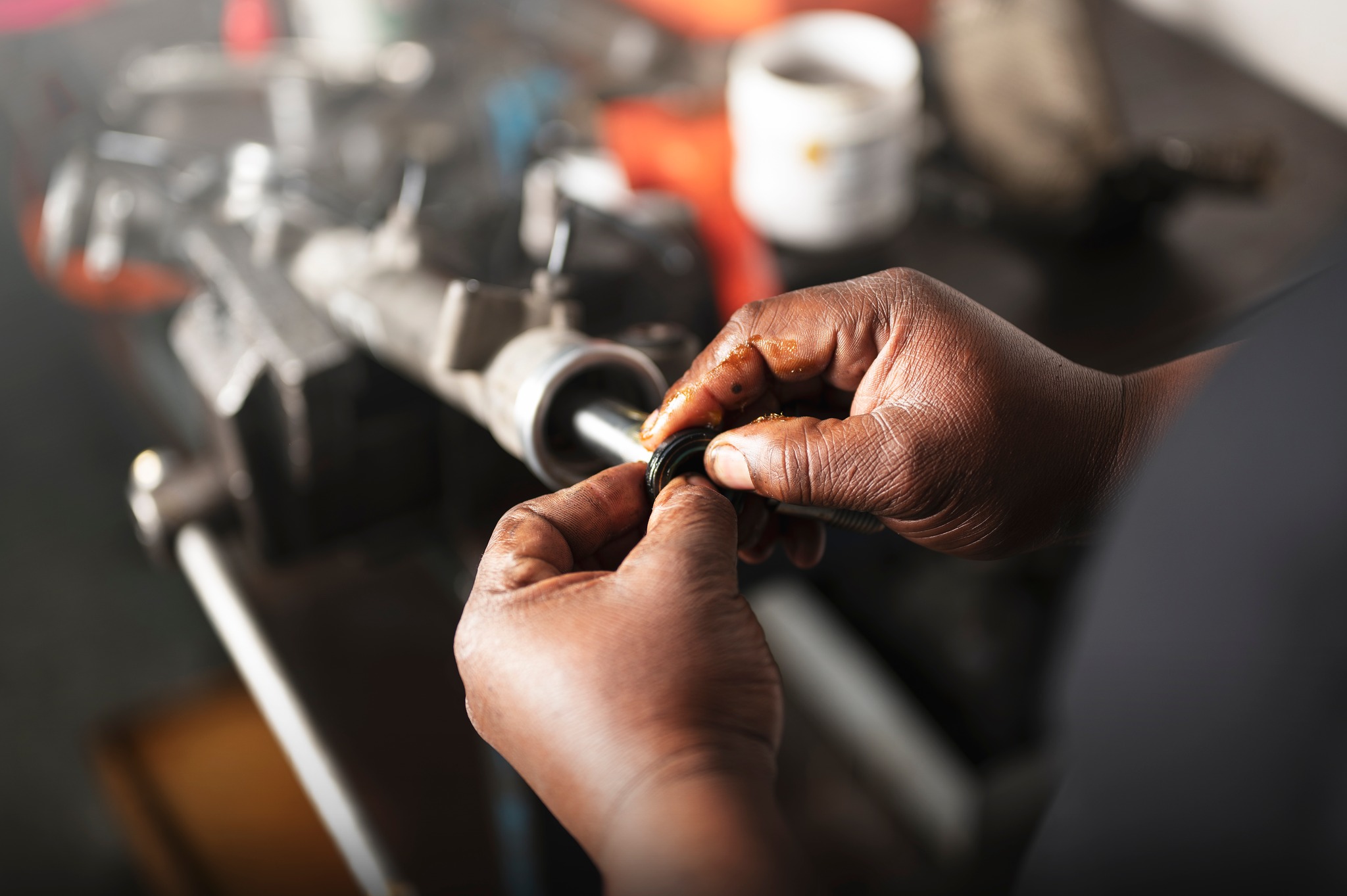
When it comes to vehicle maintenance, many drivers focus on engine oil or brake pads.
But there is a silent system working beneath you that determines exactly where your
vehicle goes or whether it stays on the road at all. Steering and suspension aren’t just
about comfort; they are critical safety components.
“Steering systems are always accounted for as life and limb. The safety of the
vehicle is compromised the moment these systems fail.”
The Warning Signals: Listen and Feel
Your car has a way of telling you when things are going wrong. One of the most common
“distress signals” is a distinct whining sound when you turn the wheel. While many
assume this means the power steering pump is faulty, that’s not always the case. It could
be something as simple as a corroded return hoses or leaking high-pressure hose.
However, the real danger signs, the ones that mean you should attend to it immediately,
are:
Dashboard Warning Lights: Never ignore a steering or stability light.
Unstable Feeling: If the steering feels “floaty,” “notchy,” or unpredictable, your
connection to the road is failing.
Loss of Return: If your steering wheel fails to “snap back” to the center after a turn,
you likely have seized components fighting against you.
Pro Tip: The Driveway Test
Not every puddle under your car is a disaster. To tell the difference between air
conditioning condensation (water) and a power steering leak, check the colour and
density. Power steering fluid is an oil; it will feel thick and slippery, and usually has a
distinct reddish or amber hue, unlike clear, thin water.
The “Parking Lot” Strain
Have you ever noticed your steering groaning specifically while you’re trying to park? This
is because low-speed maneuvers are when the steering system works its hardest. Without
the momentum of a moving car, the system has to use maximum pressure and resistance when turning the wheels. If it struggles here, a failure is imminent.
The “Single Component” Myth
The biggest mistake customers make is wanting to replace just one leaking part or one
worn joint to save money. Steering systems work as a unit. In my experience, if you only fix
one part, the renewed pressure in the system will almost certainly cause the next weakest,
oldest component to fail shortly afterwards.
A COMPREHENSIVE OVERHAUL IS THE ONLY WAY TO GUARANTEE
LONG-TERM SAFETY AND PERFORMANCE.
Conclusion: Don’t Wait for the Failure
You wouldn’t skip a regular engine service, and you shouldn’t skip a steering assessment.
Any steering or suspension problem is a life or limb situation. Make it a habit to have
these components checked at every regular service interval. Your safety and the safety
of everyone on the road depends on it.